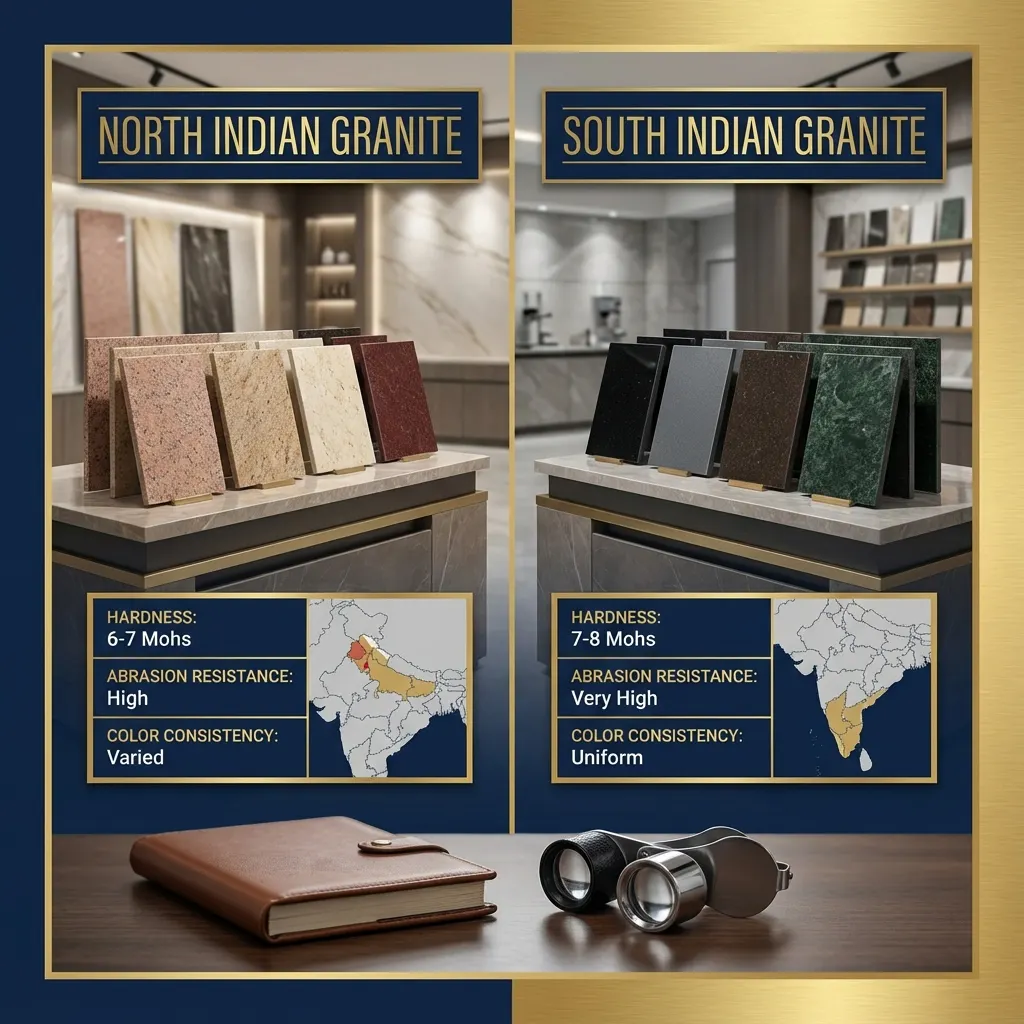
Introduction: Indian Granite Is Not One Product Category
Many international buyers make a fundamental mistake: they treat Indian granite as a single, uniform material. It is not.
Granite from North India and South India differs significantly in mineral composition, color palettes, grain structure, hardness and wear resistance, batch consistency, and export logistics.
For importers, wholesalers, and large-scale developers, understanding these differences is critical to avoid shade variation disputes, select the right stone for traffic load, control wastage, and protect long-term project performance.
Why Regional Granite Differences Matter in Bulk Sourcing
Granite hardness and color are not branding attributes. They are geological outcomes. From a supply chain perspective, these differences affect cutting yield, polishing response, abrasion resistance, replacement feasibility years later, and claim exposure on commercial projects.
Choosing the wrong region for the wrong application is one of the most expensive mistakes buyers make in stone procurement.
North Indian Granite: Warm Tones and Decorative Appeal
Typical Color Palette of North Indian Granite
North Indian granite is known for pinks, reds, light browns, creams, beige and pastel tones. These colors come from higher feldspar content, which gives the stone its warmer appearance.
Visual Characteristics
- Softer, more decorative grain
- Higher color movement
- Often preferred for visual impact rather than industrial performance
This makes North Indian granite attractive for monuments, wall cladding, decorative flooring, and low-traffic interior applications.
Hardness and Performance of North Indian Granite
From a technical standpoint: Generally slightly softer than South Indian granite, Lower abrasion resistance in comparison, Still structurally strong, but less forgiving under heavy foot traffic.
This does not mean it is weak. It means it is less ideal for abuse-heavy environments.
B2B Pros and Cons of North Indian Granite
Advantages:
- Attractive warm colors
- Strong demand in Middle East and Africa
- Good carving and polishing response
- Ideal for architectural and decorative use
Limitations:
- Higher shade variation between blocks
- Lower wear resistance for commercial flooring
- More careful batch planning required
North Indian granite sells on aesthetics. It must be managed carefully in volume.
South Indian Granite: Darker Tones and Structural Dominance
Typical Color Palette of South Indian Granite
South Indian granite is globally known for deep blacks, dark greys, steel blues, greens, and uniform dark browns. These stones contain higher quartz and ferromagnesian minerals, contributing to both color depth and hardness.
Visual Characteristics
- Tighter grain structure
- More uniform appearance
- Less dramatic color movement
- Strong, bold visual presence
These granites dominate commercial flooring, infrastructure projects, exterior cladding, and heavy-use countertops.
Hardness and Performance of South Indian Granite
This is where South Indian granite clearly separates itself.
- Higher compressive strength
- Higher abrasion resistance
- Excellent performance under heavy traffic
- Better long-term polish retention
For airports, malls, stations, and public buildings, South Indian granite is often non-negotiable.
B2B Pros and Cons of South Indian Granite
Advantages:
- Superior hardness
- Better batch consistency
- Lower long-term maintenance cost
- Excellent acceptance for international commercial projects
Limitations:
- Dark colors show dust and water marks
- Slightly higher cutting tool wear
- Heavier slabs increase freight cost marginally
South Indian granite is chosen for performance first, aesthetics second.
North vs South Indian Granite: Side-by-Side Comparison
| Parameter | North Indian Granite | South Indian Granite |
|---|---|---|
| Dominant Colors | Pink, red, beige, cream | Black, grey, green, dark brown |
| Grain Structure | Medium to coarse | Fine to medium |
| Hardness | Medium-high | High |
| Abrasion Resistance | Moderate | Excellent |
| Shade Variation | Higher | Lower |
| Best Use | Decorative, interiors | Commercial, heavy traffic |
| Export Consistency | Medium | High |
If your project involves continuous pedestrian load, South Indian granite is usually the safer technical choice.
Granite Selection Based on Project Type
Commercial & Public Infrastructure
Preferred: South Indian granite | Reason: hardness, durability, polish retention
Residential & Decorative Projects
Preferred: North Indian granite | Reason: warmer colors, visual softness
Exterior Applications
Preferred: South Indian granite | North Indian granite only with surface treatment and careful application
Mixed-Use Developments
Use South Indian granite for floors. Use North Indian granite for walls and features.
Smart buyers do not force one granite type across all applications.
Logistics, FOB/CIF Pricing, and Export Considerations
Granite region impacts export logistics more than buyers expect.
- South Indian granite slabs are denser and heavier
- North Indian granite may have higher wastage due to grain variation
- Packaging requirements differ based on hardness and finish
- FOB pricing must reflect block yield and breakage risk
- CIF pricing must factor in slab weight and container optimization
Ignoring these factors leads to unexpected landed cost escalation.
Common Buyer Mistakes in Indian Granite Sourcing
Let's be direct again.
- Choosing North Indian granite for high-traffic commercial floors
- Ignoring regional hardness differences
- Mixing blocks from multiple quarries to save cost
- Underestimating shade variation in bulk orders
- Selecting granite purely on sample appearance
Most granite complaints are procurement mistakes, not material defects.
Conclusion: Regional Knowledge Protects Your Project Margins
North Indian granite and South Indian granite are both world-class materials. They are just built for different jobs.
- North Indian granite delivers warmth and decorative appeal
- South Indian granite delivers strength and endurance
Choosing correctly reduces maintenance cost, replacement risk, client dissatisfaction, and long-term liability.
At Aleron Ceramic, we help B2B buyers align granite region, color palette, and hardness with real project demands, not catalog assumptions. Our sourcing spans natural stone and complements it with large-format porcelain slabs where performance or consistency requires it.